
Most domestic scaffolding can be erected within a few hours to one working day. A small scaffold for guttering or roof repairs may take around two to four hours, while scaffolding around an entire house could take one or two days.
Larger commercial scaffolds, temporary roofs and structures with restricted access can take several days or longer to complete.
These are only general estimates. The actual installation time depends on the size of the building, the number of working levels required, access to the property and the complexity of the scaffold design.
Looking for a scaffolder in Kent? Get in touch with H&H Scaffolding Services today.
Typical Scaffolding Erection Times
The following table provides approximate installation times for common scaffolding projects:
| Type of scaffolding | Typical erection time |
|---|---|
| Small access tower | 2–3 hours |
| Scaffolding for guttering or fascia work | 2–4 hours |
| Single elevation of a two-storey house | 3–6 hours |
| Front and side of a house | 5–8 hours |
| Scaffolding around a semi-detached house | Around one day |
| Full scaffold around a detached house | 1–2 days |
| Chimney access scaffolding | 3–6 hours |
| Scaffolding over a conservatory | 4–8 hours |
| Temporary roof scaffolding | 2–5 days or more |
| Medium commercial scaffold | 2–5 days |
| Large or complex commercial project | One week or longer |
These times assume the site is accessible, the ground is suitable and there are no significant weather or logistical delays.
A site survey will allow your scaffolding company to provide a more accurate installation schedule.
How Long Does It Take to Put Scaffolding Around a House?
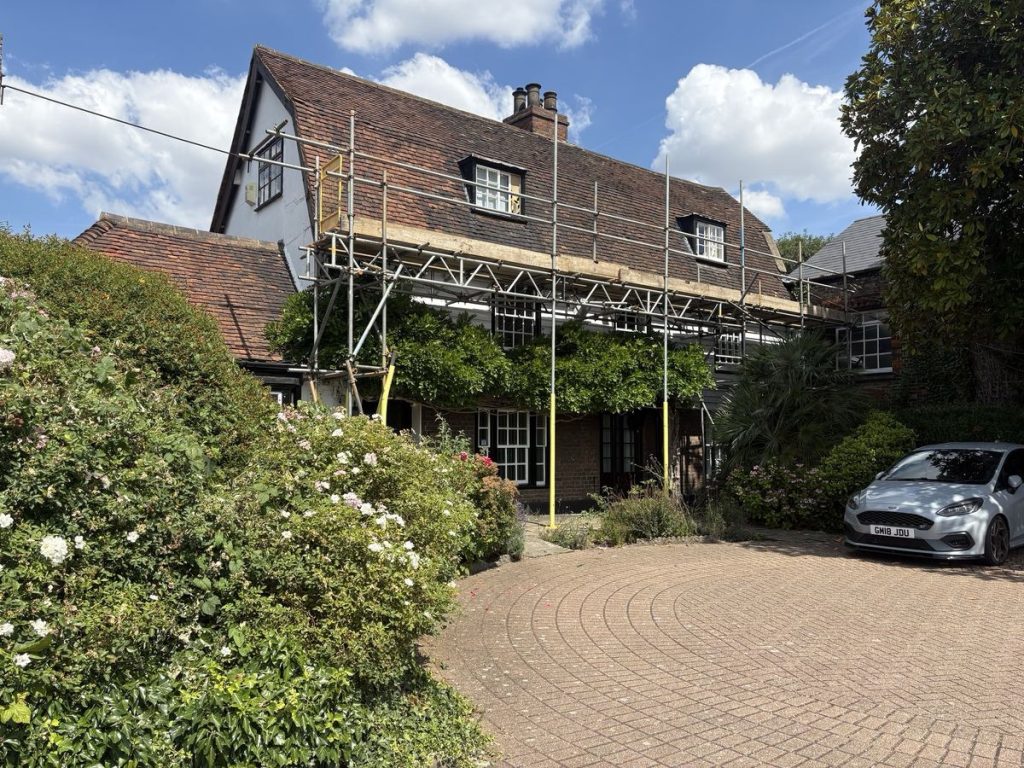
Scaffolding around a typical house usually takes between one and two days to erect.
A straightforward scaffold along the front or rear of a property can often be completed in half a day. A full wraparound scaffold takes longer because considerably more materials, working platforms, guardrails and access points are required.
Installation time will also depend on whether the property is:
- A bungalow or two-storey house
- Terraced, semi-detached or detached
- Located on level or sloping ground
- Easy to access from the road
- Surrounded by extensions or outbuildings
- Close to neighbouring properties
- Positioned beside a public pavement
Two properties of a similar size can require very different scaffolding arrangements. This is why an accurate timeframe can normally only be provided after discussing the project or inspecting the site.
How Long Does Roof Scaffolding Take to Erect?
Scaffolding for a typical residential roofing project can normally be erected within half a day to one full day.
A small roof repair may only require access along one side of the property. A complete roof replacement could require scaffolding around several elevations, along with multiple working platforms and edge protection.
Additional time may be needed where the project involves:
- A steeply pitched roof
- Several roof levels
- Dormer windows
- Solar panels
- A loft conversion
- Chimney repairs
- Restricted rear access
- A temporary weatherproof roof
It is helpful for the roofer and scaffolder to discuss the access requirements before installation. This reduces the chance of the scaffold needing to be altered after it has been erected.
How Long Does Chimney Scaffolding Take?
A straightforward chimney scaffold may take approximately three to six hours to erect.
The scaffold must provide a secure working platform around the relevant part of the chimney. The height of the building, roof pitch and chimney position will all affect the design.
A chimney located near the edge of a simple roof will usually be quicker to access than one positioned in the centre of a tall or unusually shaped property.
Shared chimney stacks, conservatories and fragile roofs may also make the installation more complicated.
How Long Does Scaffolding Over a Conservatory Take?
Scaffolding over a conservatory will typically take between four hours and one working day, depending on its size and the access available.
Scaffold cannot normally be supported directly by a conservatory roof. Beams may be needed to span the structure and transfer the weight to suitable foundations.
This requires more materials and planning than a standard scaffold erected directly beside a building.
The scaffolder will need to inspect the conservatory, surrounding ground and required working height before confirming the design.
How Long Does Temporary Roof Scaffolding Take?
A temporary scaffold roof can take anywhere from two days to more than a week to erect.
Temporary roofs are considerably larger and more complicated than ordinary access scaffolding. They may include:
- A supporting scaffold around the building
- Roof beams
- Sheeting or shrink-wrap protection
- Additional ties and bracing
- Loading bays
- Staircase access
- Specialist design calculations
The structure must be designed to withstand the expected weather conditions while protecting the property and people working below.
A temporary roof for a residential property may take several days. Large commercial buildings and complete weatherproof enclosures will generally take longer.
How Long Does Commercial Scaffolding Take to Erect?
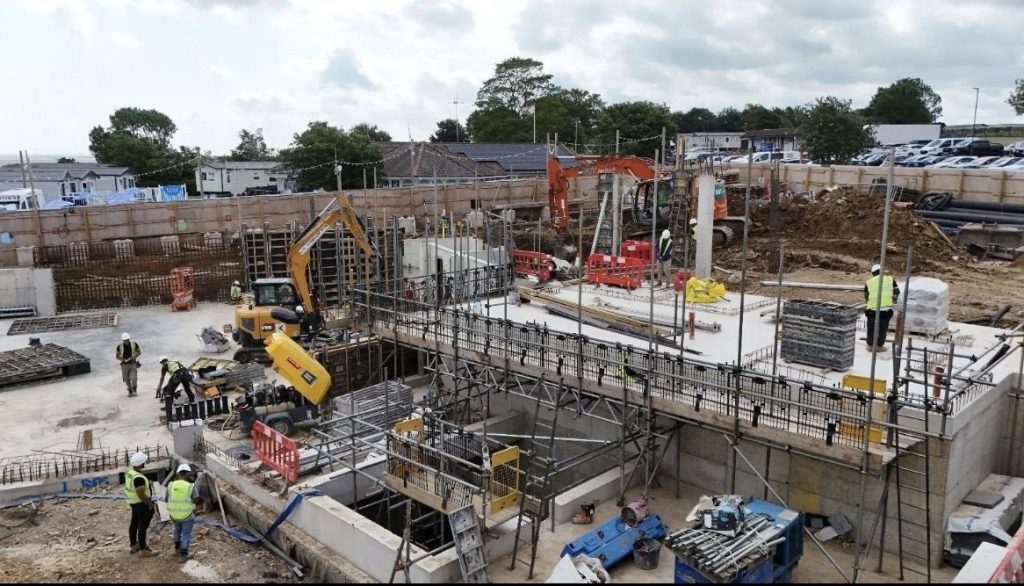
Commercial scaffolding can take from one or two days to several weeks, depending on the size and complexity of the project.
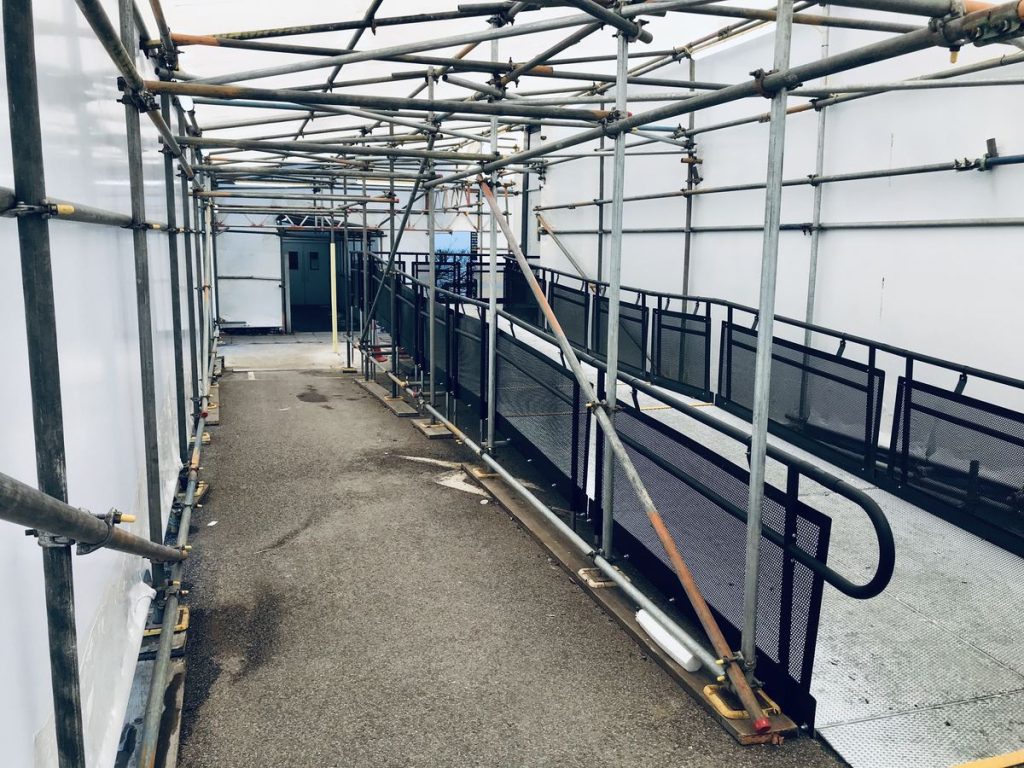
A relatively simple scaffold for a small commercial property may be completed in a few days. Large construction sites, industrial buildings, healthcare facilities and multi-storey developments require more extensive planning and installation.
Commercial projects may also involve:
- Detailed risk assessments and method statements
- Scaffold design drawings and calculations
- Loading bays
- Stair towers
- Pedestrian protection
- Pavement or highway licences
- Traffic management
- Phased installation
- Coordination with several trades
- Restricted working hours
The scaffolding programme will normally be agreed with the main contractor or site manager before work begins.
What Can Delay Scaffolding Installation?
Several factors can affect how long it takes to erect a scaffold.
Restricted Access
Scaffolding materials are heavy and need to be transported from the delivery vehicle to the erection area.
Narrow pathways, terraced properties and buildings without direct rear access mean that every component may need to be carried through or around the property. This can add considerable time to the installation.
Building Size and Height
Larger and taller buildings require more standards, boards, fittings, working platforms and safety components.
The number of elevations also matters. Scaffolding one side of a house is much quicker than erecting a full structure around the building.
Conservatories and Extensions
Conservatories, garages, extensions and fragile roofs may prevent scaffolding from being erected directly beside the main building.
Additional beams or specialist scaffold designs may be required to bridge these structures safely.
Uneven or Sloping Ground
The scaffold needs a suitable and stable foundation.
Sloping gardens, soft ground and changes in level may require additional preparation and components before the main scaffold can be erected.
Weather Conditions
Strong winds, ice, heavy rain and other unsafe weather conditions can delay scaffolding work.
Installation should never be rushed when conditions could place the scaffolders, property or public at risk.
Public Pavements and Roads
If any part of the scaffold needs to stand on or project over a public pavement or road, a licence will usually be required from the relevant local authority.
This does not necessarily make the physical installation much longer, but it can affect how soon the work can begin. Permission should therefore be arranged in advance.
H&H Scaffolding Services can manage pavement licence applications where required.
Specialist Design Requirements
Some scaffolds require bespoke calculations and design drawings before installation can begin.
This may apply to cantilever scaffolds, temporary roofs, loading bays, suspended structures and scaffolding outside recognised standard configurations.
The design stage should be completed before the installation date.
How Quickly Can Scaffolding Be Arranged?
The time it takes to erect scaffolding is different from the time it takes to arrange the installation.
A small, straightforward domestic scaffold may only take a few hours to put up, but the scaffolding company must still:
- Discuss the work and access requirements.
- Inspect the property where necessary.
- Prepare a quote.
- Schedule the scaffolding team.
- Arrange any required licences.
- Deliver the correct materials.
- Erect and inspect the scaffold.
Availability will depend on the company’s existing workload and the complexity of your project.
If you are working towards a fixed start date, contact your scaffolding company as early as possible. This is particularly important for larger projects, temporary roofs and scaffolding requiring a pavement licence.
Can Builders Start Work as Soon as the Scaffolding Is Up?
The scaffold should not be used until its erection is complete and it has been inspected by a competent person.
According to the Health and Safety Executive, construction scaffolding should be inspected before it is first used and then at least every seven days while it remains in place. It should also be inspected following substantial alterations or conditions that may have affected its safety.
Once the scaffold has been completed, inspected and handed over, the relevant trades can begin using it.
Does Scaffolding Take Longer to Dismantle?
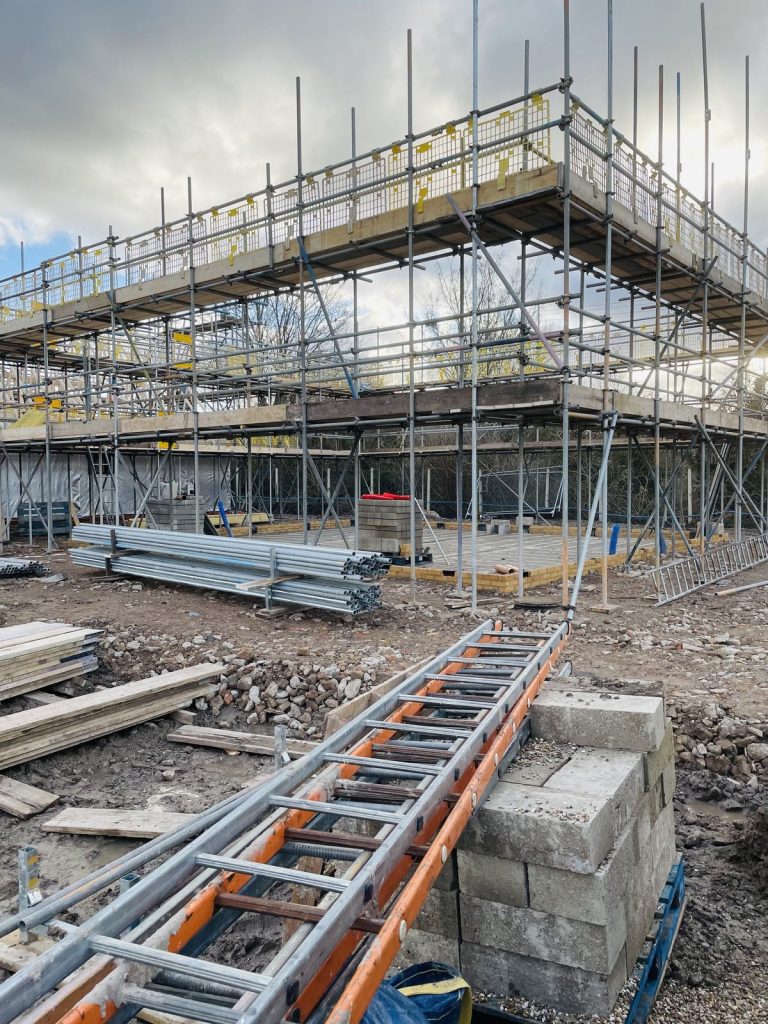
Dismantling scaffolding is often quicker than erecting it, but it must still be completed carefully and methodically.
A scaffold that took a full day to erect may be removed within several hours. Larger or more complicated structures can take considerably longer.
Access restrictions remain important because every component must be taken down safely and transported back to the vehicle.
Do not remove boards, ties or other scaffold components yourself. Contact the scaffolding company if the structure needs to be altered or removed.
How Can I Prepare for Scaffolding Installation?
Preparing the property before the scaffolders arrive can help the installation proceed smoothly.
Where possible:
- Move vehicles away from the working area
- Remove bins, garden furniture and plant pots
- Unlock gates and side entrances
- Keep children and pets away from the work area
- Tell neighbours about any potential access requirements
- Inform the scaffolder about underground drains or fragile surfaces
- Arrange parking suspensions or licences in advance
- Confirm exactly where builders or roofers need working platforms
Do not worry if heavy or fixed objects cannot be moved. Let the scaffolding company know before the installation date so they can plan around them.
Frequently Asked Questions
Can scaffolding be put up in one day?
Yes. Most straightforward domestic scaffolding can be erected within one working day. Small structures may only take a few hours, while full-house or complicated scaffolds can take two days or longer.
Can roofers work while scaffolding is being erected?
No one should use an incomplete scaffold. Roofers and other trades should wait until the structure has been fully erected, inspected and handed over.
Do I need to be at home while scaffolding is erected?
You may not need to remain at home if access has already been agreed. However, gates should be unlocked and the working area should be clear. Confirm the arrangements with your scaffolding company beforehand.
Can scaffolding be erected in the rain?
Light rain may not prevent scaffolding work, but severe weather, strong winds, ice or unsafe ground conditions can delay installation. The scaffolding team will decide whether work can continue safely.
How long can scaffolding stay up?
Scaffolding can remain in place for as long as the project requires, subject to the agreed hire period and continued safety inspections. Ask what hire period is included in your quote and whether additional charges apply if the project overruns.
Does scaffolding need to be inspected?
Construction scaffolding should be inspected before first use, at least every seven days and following events that may have affected its stability or safety.
Arrange Scaffolding in Kent and Medway
H&H Scaffolding Services Ltd provides domestic, commercial and specialist scaffolding throughout Kent, Medway, London and the South East.
Based in Rochester, our team works across Chatham, Gillingham, Strood, Maidstone, Gravesend, Dartford, Sittingbourne and the surrounding areas.
Whether you need a small scaffold for roof repairs or a more complex access system for a commercial project, we will explain the expected installation time before work begins.
Call 07702 471434 or contact H&H Scaffolding Services for a free, no-obligation quote.